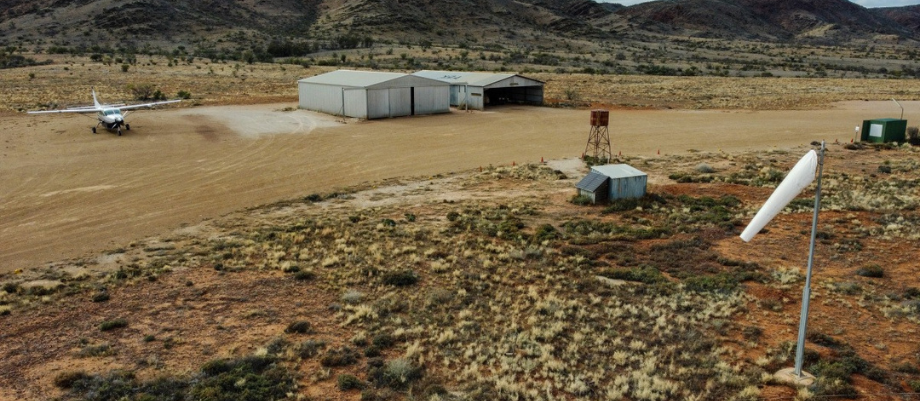
1. You may only take-off or land your helicopter if you can safely do so considering all the circumstances, including the prevailing weather conditions at:

Correct.

See chapter 4 of the VFRG.

Incorrect.

The correct answer is 'any of the above'.

See chapter 4 of the VFRG.

2. When taxiing a helicopter, maximum use of “air transit” should be made except:

Correct.

See:

Incorrect.

The correct answer is '(b) or (c)'.

See:

3. At a non-controlled aerodrome you may take-off in your helicopter from:

Correct.

See:

Incorrect.

The correct answer is 'any area which is assessed as being suitable as an HLS'.

See:

4. When operating in the vicinity of a non-controlled aerodrome published on aeronautical charts, you are to use 126.7 MHz or the discrete CTAF frequency. ‘In the vicinity’ is defined as:

Correct.

See chapter 5 of the VFRG.

Incorrect.

The correct answer is 'within 10 NM and up to a height that could result in a conflict with operations at that aerodrome'.

See chapter 5 of the VFRG.

5. What symbol displayed beside the wind direction indicator shows that the aerodrome is closed?
Non-controlled helicopter quiz Q5

Correct.

See:

Incorrect.

The correct answer is 'a white cross'.

See:

6. You are flying your VFR helicopter over land at 500 ft AGL in class G airspace. What is your minimum visibility and distance from cloud?
Non-controlled helicopter quiz Q6

Correct.

See chapter 4 of the VFRG.

Incorrect.

The correct answer is '800 m visibility clear of cloud and at a speed to avoid obstructions'.

See chapter 4 of the VFRG.

7. When is the prefix 'helicopter' required to be used in front of your callsign?

Correct.

See chapter 5 of the VFRG.

Incorrect.

The correct answer is 'when first establishing contact on any frequency'.

See chapter 5 of the VFRG.

8. A windsock at a 45 ° angle to the horizontal indicates a wind speed of approximately:

Correct.

See chapter 8 of the VFRG.

Incorrect.

The correct answer is '15 kt'.

See chapter 8 of the VFRG.

9. When operating into uncertified aerodromes it is recommended that, in addition to a windsock, the pilots use secondary methods to judge wind speed and direction. These are:

Correct.

See page 16 of AC 91-29.

Incorrect.

The correct answer is 'all of the above'.

See page 16 of AC 91-29.

10. You are flying a light helicopter and landing near third party people and property. What is the minimum recommended downwash safety distance to be established around the surface level landing site which is kept clear of people, property or parked vehicles?

Correct.

See page 20 of AC 91-29.

Incorrect.

The correct answer is '30 m – typically 2-3 rotor diameters'.

See page 20 of AC 91-29.

Online version available at: https://www.casa.gov.au//resources-and-education/pilot-safety-hub/non-controlled-aerodromes/quiz-helicopter-2026
Back to top of page