Airline passengers can avoid ending up on Santa’s naughty list this Christmas by keeping power banks, vapes and e-cigarettes in the cabin, not in checked bags.
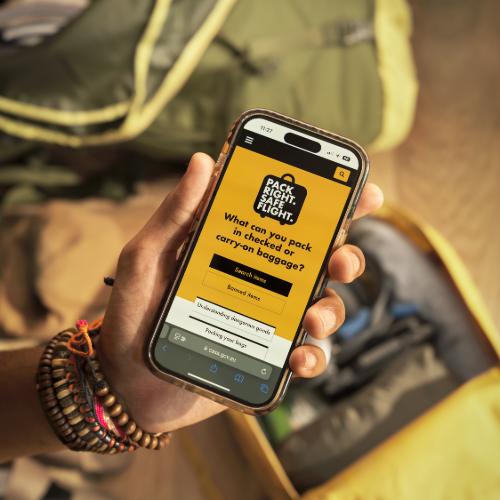
The Civil Aviation Safety Authority (CASA) has made it easy to stay in Santa's good books by following important advice from its Pack Right, Safe Flight campaign.
Putting the wrong thing in checked luggage can put a significant damper on seasonal plans by causing delays or even missed flights.
Safe holidays begin by visiting our Pack Right, Safe Flight website before leaving for the airport and discovering what can and can’t be packed.
Lithium-ion batteries top the list of common problem items, and most travellers now carry at least 4 rechargeable (lithium-powered) devices on to planes.
'Devices like phones, laptops, vapes and power banks are things we regularly travel with – but when they’re packed incorrectly, they can pose a serious fire risk,' CASA CEO and Director of Aviation Safety Pip Spence said.
'Spare lithium batteries, e-cigarettes, vapes and power banks must never be packed in checked baggage. They should always be carried in the cabin, where cabin crew are trained to respond to any incidents.
'Electrical devices that need to be plugged into mains power, are OK to include in your checked baggage.
'You can search our website for these and other commonly packed items – including aerosols, sparklers, and cleaning products – to find out whether they can be carried at all, where they should be packed, and what conditions apply.'
Failing to declare dangerous goods when checking in, whether online or at the airport, is a serious offence. Incorrect or misleading declarations can lead to significant penalties.
'Above all else, remember the season of good will applies to everyone,' Ms Spence said. 'So if you're travelling, please treat your fellow passengers and airline staff with respect.
'When the crew ask you to do things it’s to keep you safe, so please follow their instructions.'
CASA will continue to inspect airlines and other aviation operations over the holiday period to ensure high safety standards are being maintained.
Media contact
-
Aircraft
-
Aircraft registration
- Change, transfer or cancel aircraft registration
- Data files for registered aircraft
- Ferry flight registrations
- Find a registered aircraft
- Guidance for deceased estates
- Irrevocable deregistration and export request authorisation (IDERA)
- Register your aircraft
- Registered aircraft operators
- Registration marks
- Request a copy of your registration certificate
- Airworthiness
- Certification
- Design and manufacturing
- Sport aviation
-
Aircraft registration
- Drones
-
Licences and certificates
- Pilots
- Radio operators
- Air traffic controllers
-
Air operators
- Aerial application air operator's certificate
- Aerial work certificate (Part 138)
- Air transport air operator's certificate
- Alternative pathways for specialised endorsements
- Balloon air operator's certificate
- Flight training operators
- Foreign operators
- Guidance for Part 91 approvals
- Replace air operator's certificate
- Aerial photography from aircraft
- Delegates
-
Maintenance engineers
- About aircraft maintenance engineers
- Aircraft maintenance engineer exams
- Aircraft maintenance engineer licence (Part 66)
- Apply for a Part 66 licence
- Become a licensed aircraft maintenance engineer
- Maintenance of composite structures
- Part 66 and working for a Part 145 organisation
- Part 66 self-study training and examination pathway
- Recognition of prior learning
- Removing exclusions
- Licence currency and requalification
- Modular licensing for aircraft maintenance engineers
- Part 66 modular aircraft maintenance engineer licence pathways
- Flight examiners
- Flight instructors
- Aviation medicals
- Medical professionals
- Aviation reference numbers
- English language standards
-
Operations, safety & travel
- Aerodromes
- Airspace
- Aviation safety for pilots
- Safety Management Systems
-
Safety advice
- Cabin safety
- Carriage or discharge of firearms on aircraft
- Community service flights
- Cost sharing flights
- Dangerous goods and air freight
- Displays and events
- Drug and alcohol management
- Electronic flight bag
- Fatigue management
- Hazard identification and management
- Human factors and safety behaviours
- Mercy fights and operating in an emergency
- 5G and aviation safety
- Safety incident reporting
- Consumer and passenger advice
- Aeronautical information management
- Rotorcraft performance standards for flight operators
- Training and checking systems
-
Rules
- Regulatory framework
- Rules by category
- Rules by status
- Rules by type
- Changing the rules
-
Compliance and enforcement
- Delegated authority in support of aviation safety investigations
- Enforcement action
- How to comply with the rules
- Recent enforcement actions
- Safety information policy statement
- Sharing safety information
- Strict liability
- Surveillance
- Voluntary suspensions
- Recent enforcement actions
- Reporting unsafe behaviour
- Resources & education
-
About us
- Who we are
- Who we work with
- News, media releases and speeches
-
Reporting and accountability
- Environmental management and performance
- Freedom of information
- Gift and benefits register
- Gender pay gap employer statement
- List of CASA files
- Portfolio budget statements
- Register of privacy impact assessments
- Regulator Performance Framework
- Senate order on agency contracts
- Service standards
- Statement of commitment to child safety
- Work health and safety policy statement
- Protecting the environment
- External security vulnerability disclosure program
- Careers
- Sponsorship and scholarship
- About this website
- Contact us
- Events
- Subscribe