
The Civil Aviation Safety Authority (CASA) is reminding pilots of the importance of careful flight planning, sound decision-making and keeping clear of bushfires this bushfire season.
Date
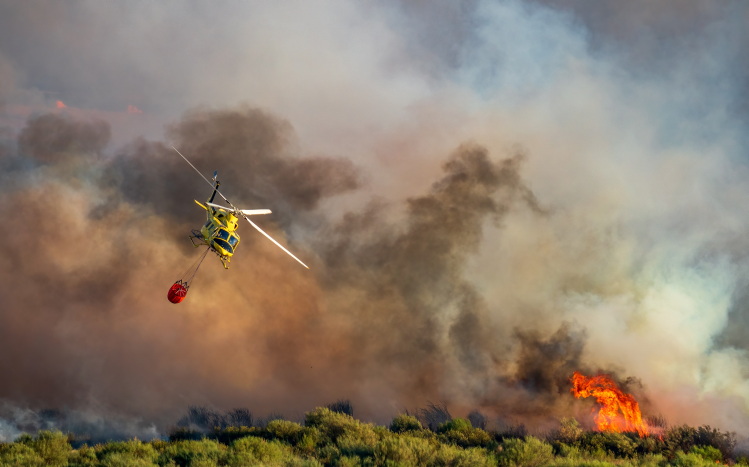
When fires ignite, they can spread quickly, with smoke affecting visibility and disrupting normal flight paths. At the same time, aerial firefighting operations rely on access to the airspace around active fires to support firefighting efforts and protect lives, property and communities.
Firefighting aircraft often operate at low altitudes and may change direction suddenly, creating significant risks for other airspace users in the vicinity.
Any crewed aircraft not involved in firefighting operations must remain at least 5 nautical miles (approximately 9 kilometres) from the fire boundary, although pilots are encouraged to keep a much greater distance wherever possible.
For drone operators, the message is simple: never fly near a bushfire under any circumstances.
CASA CEO and Director of Aviation Safety, Pip Spence, said pilots and drone operators can play an important role in supporting emergency response efforts by following the rules.
‘Bushfires are no place for recreational flying. Keeping your aircraft away from firegrounds gives emergency crews the space they need to protect lives, homes and communities,’ Ms Spence said.
‘Before you take off, ensure you consider the conditions, plan your flights well away from fire areas, check the rules and stay up to date with advice from your local fire authority, including information about any active bushfires in your area.’
‘For drone flyers, the best thing you can do is keep it on the ground. Drones are hard for pilots to spot and can put firefighting aircraft and helicopters at risk.
Safety regulations governing aerial firefighting operations include pilot training and experience requirements, approvals for operators conducting fire spotting and water or retardant dropping activities, and the establishment of temporary danger or restricted airspace around active fires.
Australia’s aerial firefighting capability includes more than 500 aircraft from over 150 operators, which collectively log an average of 30,000 flight hours each year in support of firefighting efforts.
CASA requires approved firefighting operators to identify and manage safety risks, including pilot fatigue. We conduct regular safety checks and audits to ensure operators continue to meet the required standards.
Media contact
Mobile
1300 773 806
Email
Reference number
MR2826