

Changes to airspace at Bankstown Airport will proceed with the introduction of a southeast visual flight rules (VFR) corridor from 9 July 2026.
Date
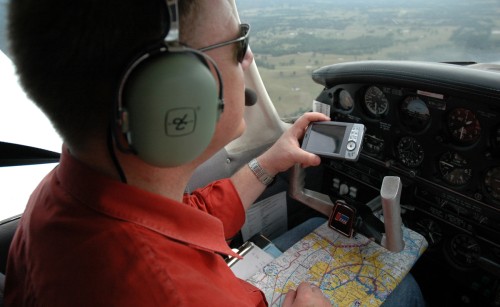
The decision follows detailed safety and operational assessment, along with consultation with industry and the community. CASA has determined the proposal provides a safe and effective way to manage increasing air traffic in the Sydney Basin.
This change forms part of a broader program across the Sydney Basin to support increased traffic demand and the commencement of operations at Western Sydney International Airport opening later this year. Operators and pilots are encouraged to check our Sydney airspace changes regularly for updates. This includes a new Stay OnTrack - Flying the Sydney region guide which will be available by 9 July to help VFR pilots to fly safely and confidently in the Sydney region.
Why we are making changes to airspace around Bankstown
Airspace around Bankstown Airport is busy and becoming more complex.
It is used by:
- flight training organisations
- charter and freight operators
- emergency services
- recreational pilots.
Most VFR aircraft currently depart to the north and west. These routes are congested and require aircraft to operate in proximity and converge at limited exit points.
At the same time, the introduction of Western Sydney International Airport airspace reduces available departure options and increases traffic concentration.
The southeast corridor provides an additional structured departure path to:
- redistribute traffic
- reduce congestion
- improve how aircraft movements are managed.
Why CASA decided to proceed
Safety is CASA’s primary consideration.
The decision responds to known risk drivers in the Bankstown operating environment. These include:
- departing flights in proximity to arriving traffic
- convergence of aircraft at constrained exit points
- increasing traffic concentration due to broader airspace changes.
The corridor addresses these risks by providing an additional outbound route aligned with aircraft flight paths and redistributing traffic away from high convergence areas.
We considered alternative options but did not identify a design that would provide a better balance of risk within the constraints of the Sydney Basin airspace system.
We also considered the risks of not making a change. Without an additional route, congestion and complexity would continue to increase.
How the design improves safety
The corridor supports a more structured and predictable operating environment.
Key features include:
- a one-way outbound flow, helping to separate traffic travelling in different directions
- air traffic controllers sequencing and managing traffic within Class D airspace
- transponder and surveillance requirements to support monitoring
- defined procedures and coded clearances to improve pilot understanding.
How consultation shaped the design
The final design reflects multiple stages of consultation and iterative development.
Earlier proposals included two-way operations. Feedback raised concerns about opposing traffic flows and collision risk. In response, the design was changed to a single one-way outbound corridor within controlled airspace.
Consultation also raised concerns about:
- airspace incursions
- low-level operations
- congestion at entry and exit points
- emergency landing options.
These issues were considered in the safety assessment. The final design includes defined boundaries, air traffic control sequencing and coded clearances to reduce risk.
What will change
The approved design includes:
- reclassifying airspace south of Bankstown to Class D from 1,000 to 1,500 ft AMSL
- introducing a one-way, daytime-only VFR corridor for outbound aircraft
- requiring aircraft to carry a transponder
- creating additional Class G airspace further south, from the surface to 1,500 ft AMSL.
The corridor will operate alongside existing routes and provides an additional access pathway rather than restricting access.
Operational, community and environmental considerations
The corridor primarily supports general aviation, including emergency services, training, private and aerial work operations.
CASA recognises that some operators will experience changes to routing or workload. These are consistent with broader airspace changes across the Sydney Basin and are proportionate to the safety benefits.
Community feedback raised concerns about noise, environmental impacts and consultation. These matters were considered.
We are satisfied that environmental impacts and consultation requirements have been addressed in line with legislative obligations, subject to the primacy of safety.
What happens next
The change will commence on 9 July 2026.
The new airspace will be introduced through Aeronautical Information Publication (AIP) Supplement, with charts updated in a future Aeronautical Information Regulation and Control (AIRAC) cycle.
We will implement post implementation monitoring for at least 6 months. This will track corridor use, congestion and safety outcomes, and identify any further improvements.
Learn more
Read AIP Supplement H87/26 effective 9 July 2026.
Visit the CASA Consultation Hub.
See our webpage about Sydney basin airspace changes commencing 9 July to support the Western Sydney International Airport which opens later this year.
Stay up to date and subscribe to our airspace and aerodromes mailing list.