When it comes to proficiency checks, did you know there is flexibility built into the rules which can reduce duplication, streamline training programs and lower costs?
Date
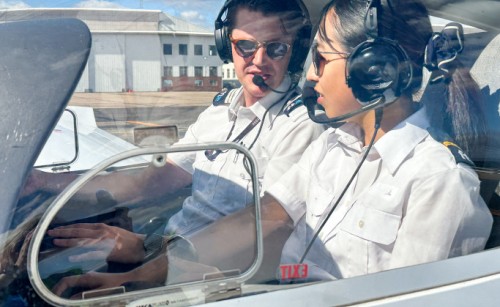
One of the most effective but often misunderstood options is the ability to combine proficiency checks across similar aircraft types, ensuring pilots remain competent without repeating equivalent tests unnecessarily.
Twice‑yearly proficiency checks have long applied to:
- operators conducting the previously named regular public transport operations, or
- operators conducting any operation in any aircraft if the maximum take-off weight exceeds 5,700 kilograms
- any other operator that CASA had specified to provide a training and checking organisation for their operation.
From February 2025, these twice-yearly check requirements were extended from operators who had a training and checking organisation under the previous regulations to all operators under the Civil Aviation Safety Regulations 1998 (CARs) whose pilots fly:
- passenger, cargo or medical transport operations under the Instrument Flight Rules (IFR), or at night
- specified aerial work operations involving higher‑complexity aircraft or operations under the IFR, or at night. (Note for operators who don’t fly these operations, you may also choose to have a formal training and checking system which may impose a twice-yearly proficiency check requirement for your pilots).
What operators and head of training and checking need to know
You must ensure your pilots are competent to conduct your operations and have successfully completed the operator’s training requirements and relevant proficiency checks. Under the CASRs, proficiency checks are required:
- before commencing unsupervised line operations for an operator
- as part of recurrent training and checking.
The purpose of the proficiency check is to confirm that a flight crew member is competent in the activities they perform for the operator.
You can combine checks across multiple aircraft types
We allow you to combine proficiency checks across similar aircraft types to avoid redundant testing and minimise cost.
You have the discretion, subject to your approved operational procedures, to decide if checks in one aircraft type can cover the same competencies in another, provided the types are sufficiently similar in systems and emergency handling. For example, some single and multi-engine piston aeroplanes by manufacturers such as Piper or Cessna often share similar controls and drills (engine failure procedures), so repeating checks on each type is unnecessary when competency outcomes are equivalent.
However, some competencies may be platform-specific, such as where there are significant differences in aircraft systems or the execution of abnormal or emergency procedures. In these cases, you will need to be checked in the specific aircraft type to meet your training and checking requirements.
Our multi-part guidance material provides examples of the requirements for pilots of mixed fleet including for piston engine, class rated piston engine and turbine engine aircraft.
It also explains how Part 61 of CASR proficiency checks interact with operator proficiency checks, and when you can combine proficiency checks across aircraft types that are similar.
If you have any questions, contact our regulatory guidance team or ask to speak to one of our Aviation Safety Advisors.
More information
- Annex B to Multi-Part AC 119-11 and AC 138-02 V6.1 – Part 133, 135 and 138 training and checking (see Section 2.3 Flight crew proficiency checks with practical examples for different aircraft and the checks you’ll need)
- Proficiency checks
- Training and checking systems for flight operators